


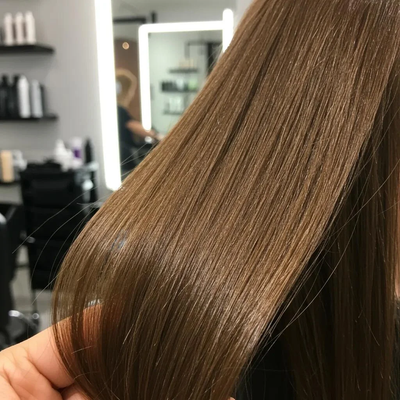
Keratin Treatment for High-Porosity Hair: How to Smooth Frizz and Improve Manageability
KERATIN TREATMENT on 19th Oct 2026
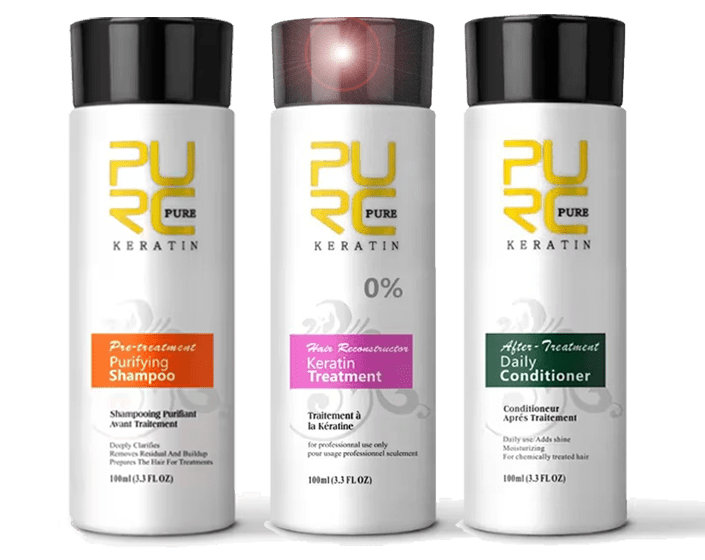
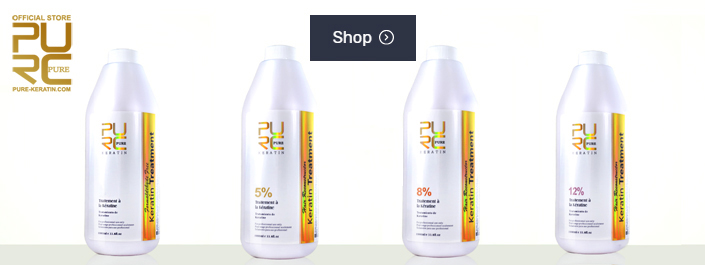
Updated October 2026 | Pure Keratin Hair Care Guide
Keratin Treatment for High-Porosity Hair: How to Smooth Frizz and Improve Manageability
Yes, high-porosity hair can benefit from a keratin treatment when the treatment is selected and applied according to the condition of the hair. Keratin smoothing can help reduce visible frizz, improve softness and make porous hair easier to style. However, high-porosity hair is often also bleached, heat-damaged or chemically processed, so more product and more heat do not necessarily mean better results.
The goal should be controlled smoothing rather than aggressive saturation. A well-chosen keratin treatment can create a smoother-feeling hair surface, improve shine and reduce the amount of daily styling needed while still respecting fragile lengths and ends.
This guide explains what high porosity really means, how keratin treatments interact with porous hair, how to avoid overprocessing and how to maintain smoother results afterwards.
Quick Answer: Is Keratin Good for High-Porosity Hair?
For many people, yes. High-porosity hair tends to become frizzy, rough, tangled and difficult to manage because its surface has often been damaged by bleaching, coloring, chemical processing, heat styling, UV exposure or ordinary weathering.
A keratin smoothing treatment can temporarily improve the way that damaged surface behaves. It may make the hair feel smoother, look shinier and react less dramatically to humidity.
What it cannot do is permanently turn damaged hair back into biologically new hair. Hair-care products provide cosmetic repair, conditioning and surface protection; they do not permanently regenerate an already-formed hair fiber.
What Is High-Porosity Hair?
Hair porosity describes how readily a hair fiber interacts with water, cosmetic products and chemical treatments.
The outside of each hair strand is protected by overlapping cuticle cells. When the surface becomes extensively weathered or damaged, water and cosmetic ingredients may move into and out of the fiber more readily. This is commonly described as high-porosity hair.
High porosity can occur naturally, but it is especially common after repeated:
- Bleaching or highlighting
- Permanent hair coloring
- Chemical straightening or relaxing
- Frequent flat ironing
- High-temperature blow drying
- Sun and UV exposure
- Chlorine or salt-water exposure
- Mechanical damage from brushing and friction
How Do You Know If Your Hair Is High Porosity?
High-porosity hair often behaves differently from healthier or lower-porosity hair. You may notice that your hair becomes wet very quickly but also seems to lose moisture quickly, absorbs conditioner almost immediately, tangles easily or becomes frizzy soon after styling.
Other common signs include a rough feel through the mid-lengths and ends, reduced shine, frequent breakage, split ends and a history of bleaching or intensive chemical processing.
Be cautious with the popular “hair float test,” where a strand is placed in a glass of water. Oils, product residue, strand diameter and surface tension can all influence whether a hair floats or sinks, so it should not be treated as a reliable diagnosis.
Your hair history and the way your hair behaves during washing, conditioning and styling are usually much more useful.
Why Does High-Porosity Hair Get So Frizzy?
Frizz is partly a surface problem. When the outside of the hair is irregular and damaged, neighboring fibers do not lie together smoothly. The hair also reacts more noticeably to changes in environmental moisture.
That is why high-porosity hair may look relatively smooth immediately after styling but expand, puff or develop flyaways as soon as humidity increases.
The uneven surface also scatters light rather than reflecting it evenly, which helps explain why damaged porous hair can appear dull even when it has been freshly washed.
How Does a Keratin Treatment Help High-Porosity Hair?
1. It Helps Create a Smoother Hair Surface
Keratin treatments combine proteins, amino acids, conditioning ingredients and smoothing agents in formulations designed to improve the feel and appearance of the hair surface.
When appropriately processed, the result can be hair that feels less rough and looks more polished.
2. It Can Reduce Visible Frizz
Smoother strands align more easily with one another. This can reduce puffiness, flyaways and the uncontrolled appearance associated with high-porosity frizz.
3. It Can Improve Manageability
Porous hair often tangles easily and requires more brushing, blow drying and flat ironing. After an effective smoothing treatment, many people find that the hair is easier to detangle and requires less effort to style.
4. It Can Improve Shine
A smoother surface reflects light more evenly. Keratin-treated hair may therefore appear glossier even without adding large quantities of oil or silicone-based finishing products.
5. It May Reduce the Need for Daily Heat Styling
One of the most practical benefits of a keratin treatment is not simply how the hair looks immediately afterwards. If the hair becomes easier to blow dry and control, you may need less repeated heat styling between washes.
Does Keratin Permanently Repair High-Porosity Hair?
No cosmetic treatment permanently restores an already-damaged hair fiber to its original biological state.
Keratin and hydrolyzed proteins can improve the surface properties, feel and appearance of damaged hair, and conditioning ingredients can temporarily reinforce vulnerable areas. However, the effect gradually diminishes with washing, styling and environmental exposure.
This distinction is important because claims such as “permanently closing the cuticle” or “resetting damaged hair to normal porosity” can oversimplify what cosmetic hair treatments actually do.
Think of keratin treatment as longer-lasting cosmetic smoothing and reinforcement, not permanent regeneration.
High-Porosity Hair vs. Low-Porosity Hair
| Characteristic | High-Porosity Hair | Low-Porosity Hair |
|---|---|---|
| Water absorption | Often becomes wet quickly | May take longer to become fully wet |
| Drying behavior | May lose moisture quickly | Can take longer to dry |
| Product behavior | Products may seem to disappear rapidly | Products may remain on the surface |
| Common concern | Frizz, roughness, tangling and breakage | Buildup, heaviness and product overload |
| Keratin application priority | Avoid excessive saturation and excessive heat | Avoid heavy coating and buildup |
If your hair behaves in the opposite way and products tend to sit on the surface, read our Keratin Treatment for Low-Porosity Hair Guide.
The Biggest Mistake With Keratin on High-Porosity Hair: More Is Not Better
Because porous hair absorbs cosmetic products quickly, it is easy to assume that it needs a very large quantity of keratin treatment.
That approach can backfire.
Oversaturating fragile hair may leave it heavy, coated or stiff. Excessive flat-ironing can create additional thermal damage, particularly through already-lightened ends.
The better approach is even distribution with controlled product quantity.
Pay particular attention to extremely porous ends. They often need less product and less thermal stress than stronger new growth.
Should High-Porosity Hair Be Wet, Damp or Dry Before Keratin?
There is no single correct answer for every keratin treatment.
This is an important point because internet guides sometimes recommend applying keratin universally to damp or “80% dry” hair. In reality, formulations are designed differently.
Some keratin systems require completely dry hair before application, while others specify damp hair. Always follow the instructions for the exact treatment you are using rather than borrowing the application method from another brand.
For example, selected Pure Keratin professional treatment formulas specify drying the hair completely before treatment application.
How to Prepare High-Porosity Hair for a Keratin Treatment
Step 1: Evaluate the Condition, Not Just the Porosity
High porosity and severe damage are not exactly the same thing.
If your hair is breaking extensively, feels unusually stretchy or gummy when wet, or has recently undergone intensive bleaching, the priority may be conditioning and reducing further chemical and thermal stress rather than immediately performing another smoothing process.
Step 2: Perform a Strand Test
A strand test is especially valuable for bleached, highlighted, fine or highly porous hair.
It allows you to evaluate changes in texture, elasticity and color before committing the entire head to the treatment.
Step 3: Follow the Recommended Pre-Cleansing Protocol
Many professional keratin systems include a pre-treatment or clarifying shampoo to remove oils, minerals and styling-product buildup.
Follow the manufacturer's directions rather than repeatedly clarifying fragile hair in an attempt to make it “more porous.”
Step 4: Apply Evenly Rather Than Heavily
Work in small sections and comb through carefully so that the formula is distributed consistently.
High-porosity ends may absorb treatment much faster than stronger areas near the roots. Avoid repeatedly adding product simply because the hair no longer looks visibly wet with treatment.
Step 5: Use Heat Conservatively
Heat is a critical part of many keratin smoothing systems, but damaged hair has less margin for error.
Fine, bleached and highly porous sections generally require a more conservative approach than strong, coarse, resistant hair. Use the temperature and number of passes permitted by the manufacturer for your hair condition rather than automatically selecting the maximum setting.
Keratin Treatment for High-Porosity Curly Hair
High porosity is extremely common in curly and coily hair because bends in the fiber can make the strand more vulnerable to weathering and mechanical stress. Coloring, detangling and heat styling can increase that vulnerability further.
Keratin treatment can help porous curls become smoother, softer and easier to detangle, but it can also relax some of the curl depending on the formula, processing method and amount of heat used.
If maintaining your curl pattern is important, explain that goal before treatment and choose a smoothing approach rather than pursuing maximum straightening.
The objective does not have to be pin-straight hair. For many people, success means less halo frizz, better curl definition, easier detangling and faster styling.
What About High-Porosity Bleached or Blonde Hair?
Bleached hair deserves particular caution because bleaching can significantly alter the hair surface and internal structure.
Very light blonde or highlighted sections may respond differently to treatment and heat than darker, less-processed areas on the same head.
A strand test is especially important because intensive heat can affect both the condition and appearance of compromised blonde hair.
Do not assume that the same flat-iron setting should be used from roots to ends when the levels of damage differ dramatically.
Can High-Porosity Hair Get Too Much Protein?
People often describe stiff, rough or brittle-feeling hair as experiencing “protein overload.”
The term is widely used in hair-care communities but is not a formal medical diagnosis. What matters practically is how your hair responds to the complete formulation.
If repeated protein-rich masks, leave-ins and treatments leave your hair feeling increasingly rigid rather than flexible and soft, reduce the frequency of those products and emphasize conditioning and lubrication.
Keratin treatment should be part of a balanced routine rather than an excuse to add protein to every product you use.
High-Porosity Hair Aftercare: How to Keep the Result Smooth
Aftercare has a major influence on how long your smoothing result remains noticeable.
Always follow the waiting period specified for your exact formula before washing. Some modern systems permit earlier washing, while other treatments have a longer setting period.
Afterwards, use a gentle shampoo compatible with keratin-treated hair, condition the lengths regularly and use an intensive mask when the hair needs extra softness.
Minimize unnecessary flat-ironing, use heat protection when styling, and rinse the hair after swimming in chlorinated or salt water.
For a complete maintenance routine, read our Keratin Treatment Aftercare Guide.
How Long Does Keratin Last on High-Porosity Hair?
There is no universal lifespan for every keratin treatment.
Results depend on the formula, hair condition, washing frequency, shampoo choice, swimming, heat styling and environmental exposure.
Professional smoothing treatments may remain noticeable for several weeks or months, while lighter smoothing products may last for a much shorter period.
High porosity does not automatically mean the treatment will disappear immediately. Correct application and appropriate aftercare matter just as much as the starting porosity.
Important Safety Considerations Before a Keratin Treatment
Hair-smoothing products should be evaluated by their actual ingredients rather than marketing language alone.
The U.S. Food and Drug Administration advises consumers to check smoothing-product labels for ingredients such as formaldehyde, formalin and methylene glycol, which can indicate that formaldehyde is present or may be released during use.
Adequate ventilation is important whenever a heat-activated professional smoothing treatment is performed.
It is also important not to assume that every product marketed as “formaldehyde-free” is automatically risk-free. Emerging medical research has reported kidney injury associated with some hair-straightening formulations containing glyoxylic acid.
Check the complete ingredient list and, for professional products, the Safety Data Sheet. If your hair is severely damaged or you are uncertain about the formulation or application technique, a licensed professional is the safer option.
Which Keratin Treatment Is Best for High-Porosity Hair?
The best choice is not necessarily the strongest treatment available.
Look for a professional-quality smoothing system that allows you to match the application and heat level to your hair's thickness, texture, chemical history and degree of damage.
Hydrolyzed keratin, conditioning agents and lightweight oils can be especially useful when the goal is improved softness, shine and manageability rather than aggressive straightening.
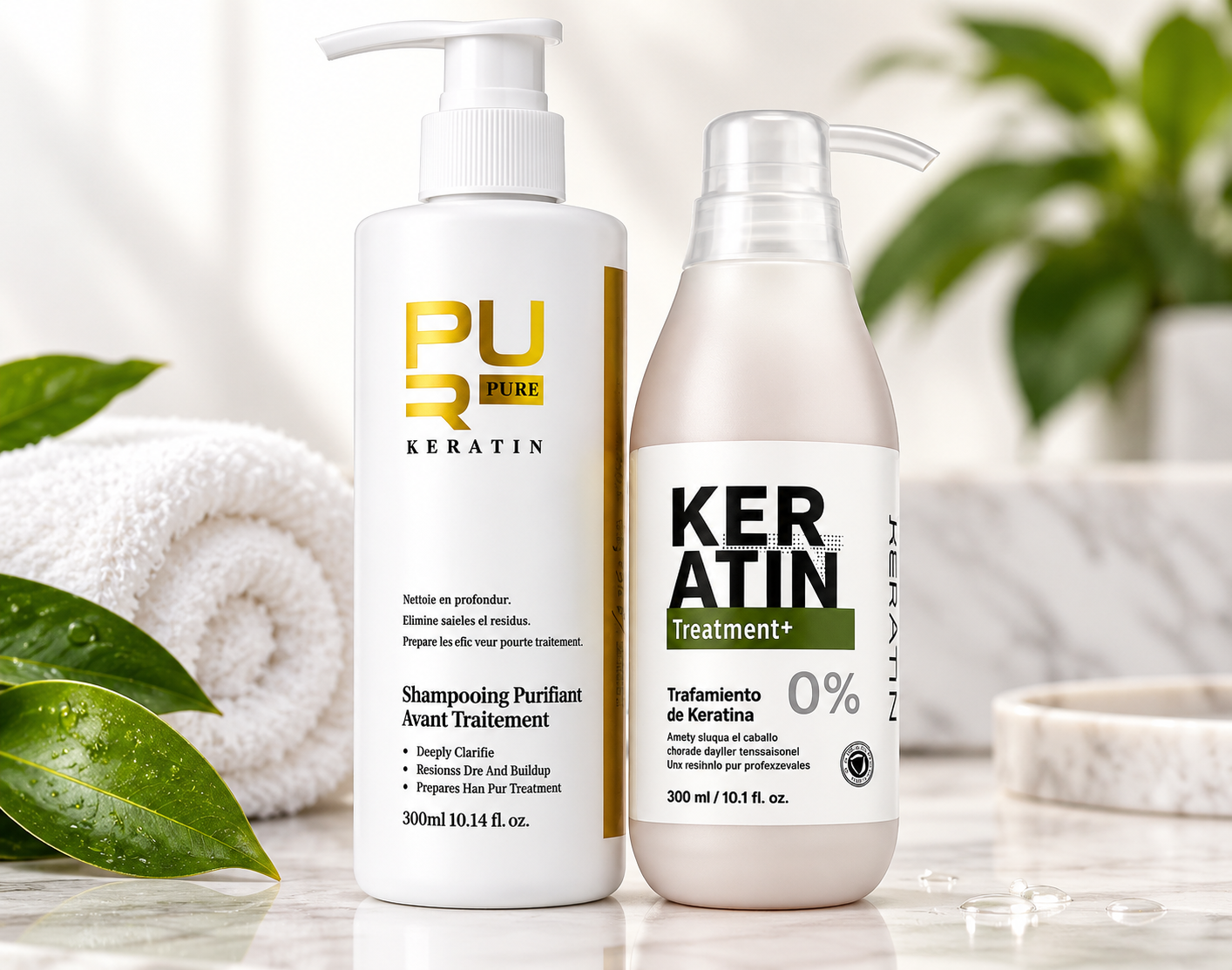
You can explore Pure Keratin professional smoothing treatments and compare the available formulas before selecting the treatment best suited to your hair.
Why Choose Pure-Keratin.com for Keratin Hair Care?
Pure-Keratin.com specializes in professional and at-home keratin hair care, with more than 30 years of hair-care experience and a catalog of 200+ hair-care products.
That range makes it possible to build a complete routine rather than purchasing a smoothing treatment in isolation—from pre-treatment cleansing and professional keratin formulas to shampoos, conditioners, masks and maintenance products.
Pure Keratin also focuses on affordable treatment options for both individual customers and salon professionals, supported by customer feedback from multiple international markets including the United States, Canada, the United Kingdom and Australia.
For customers comparing treatment strength, bottle size, aftercare and different hair types, Pure-Keratin.com provides one of the most comprehensive specialist selections for building a complete keratin routine.
Frequently Asked Questions About Keratin Treatment for High-Porosity Hair
Is keratin treatment good for high-porosity hair?
Yes, it can be. Keratin smoothing may reduce frizz, improve softness and make high-porosity hair easier to manage. The condition of the hair, treatment formula, amount applied and heat used all matter.
Can keratin treatment make high-porosity hair worse?
It can if already-fragile hair is overprocessed, oversaturated or exposed to excessive heat. A strand test and conservative application are especially important for bleached or severely damaged hair.
Does keratin permanently fix high hair porosity?
No. Keratin treatments can temporarily improve the surface, feel and manageability of porous hair, but they do not permanently regenerate a damaged hair fiber.
Should high-porosity hair use less keratin treatment?
Often the priority is controlled, even application rather than maximum saturation. Highly porous ends can absorb product quickly and may not need repeated application.
What temperature should I use for high-porosity hair?
There is no universal temperature for all keratin systems. Use the temperature specified by the manufacturer for your particular hair type and condition. Fine, bleached or fragile hair generally requires more conservative thermal processing than strong, coarse hair.
Can I do a keratin treatment on bleached high-porosity hair?
Possibly, but bleached hair requires extra caution. Perform a strand test and assess breakage, elasticity and overall condition before treatment. Severely compromised hair may need recovery time before another heat-intensive process.
Will keratin straighten high-porosity curly hair?
It may loosen the curl pattern, but the amount varies greatly according to the formula, processing method and heat. If you want to preserve curls, choose a smoothing-focused approach rather than maximum straightening.
What should I use after keratin treatment on porous hair?
Use a gentle shampoo compatible with your treatment, condition regularly, apply a moisturizing mask when needed and protect the hair from unnecessary heat, chlorine and salt water. Always follow the aftercare instructions for the exact formula used.
Final Takeaway
High-porosity hair does not need the maximum amount of keratin, the maximum temperature or the maximum number of flat-iron passes.
It needs the right combination of smoothing, conditioning and controlled processing.
When the hair is strong enough for treatment, an appropriately selected keratin formula can help reduce frizz, improve shine and make porous hair significantly easier to manage. The best results come from respecting the existing condition of the hair, following the exact treatment protocol and maintaining the result with gentle aftercare.
Ready to build your routine? Explore Pure Keratin Treatments or read our Complete Keratin Treatment Guide.