


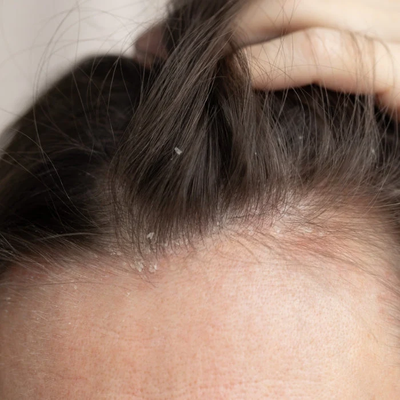
Can You Get a Keratin Treatment If You Have Dandruff or a Sensitive Scalp?
PURE KERATIN on 6th Sep 2026
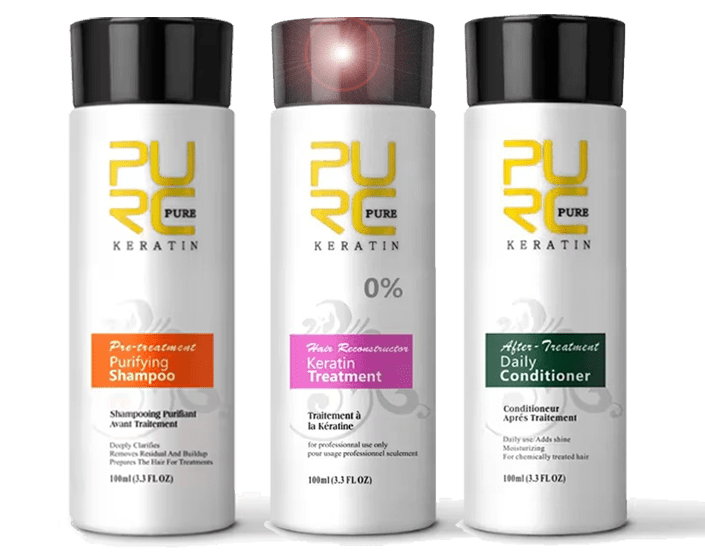
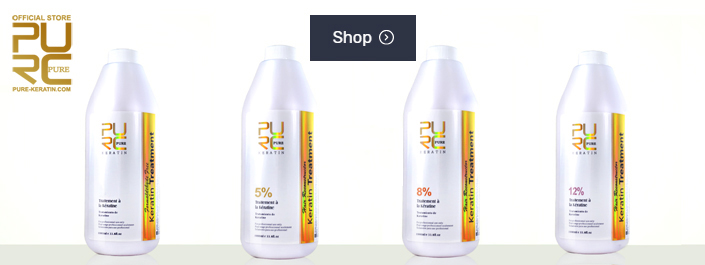
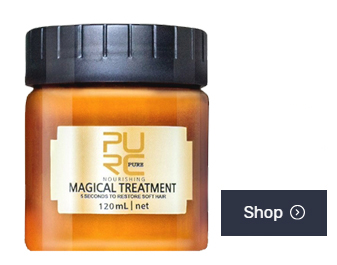
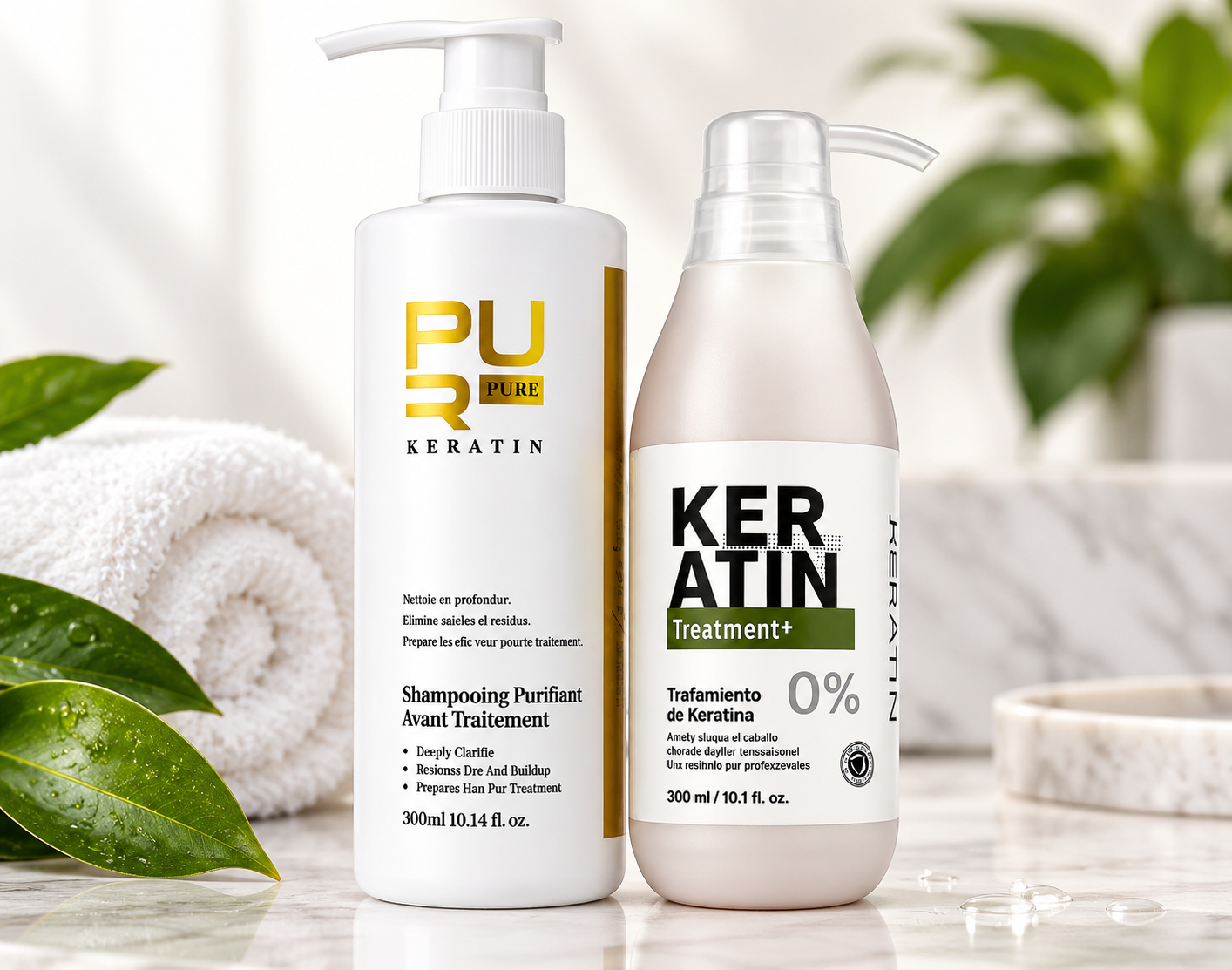
Can You Get a Keratin Treatment If You Have Dandruff or a Sensitive Scalp?
Sometimes, yes—but an irritated, inflamed, broken, or actively flaring scalp is a good reason to postpone a keratin treatment. Mild, well-controlled dandruff does not automatically prevent someone from having a keratin smoothing service. However, if your scalp is red, painful, intensely itchy, cracked, bleeding, covered with thick scale, or reacting to another product, the safer approach is to address the scalp problem first.
This distinction matters because a keratin treatment is designed primarily for the hair fiber, not for treating dandruff or scalp disease. Some smoothing formulas and the heat used during treatment can irritate sensitive skin, particularly when product comes into direct contact with the scalp.
If you regularly experience dandruff, scalp sensitivity, seborrheic dermatitis, eczema, psoriasis, or reactions to hair products, tell your stylist before the service and consider speaking with a dermatologist if symptoms are persistent or severe.
Quick Answer: Can You Get Keratin With Dandruff?
- Mild, controlled dandruff: A keratin treatment may still be possible.
- Active itching or irritation: It is usually better to calm the scalp first.
- Broken, scratched, bleeding, or inflamed skin: Postpone the treatment.
- Seborrheic dermatitis, psoriasis, or eczema: Ask your dermatologist whether a chemical smoothing service is appropriate during your current scalp condition.
- History of reactions to hair treatments: Discuss ingredients and patch testing with your stylist before proceeding.
A healthy scalp should take priority over making a keratin treatment last as long as possible.
What Is the Difference Between Dandruff and a Sensitive Scalp?
Dandruff and scalp sensitivity can overlap, but they are not the same problem.
| Scalp Concern | Typical Signs | Keratin Consideration |
|---|---|---|
| Dandruff | White or yellowish flakes, possible itching | May be compatible if mild and controlled |
| Sensitive scalp | Burning, stinging, tenderness, itching after products | Higher risk of discomfort from chemical services |
| Seborrheic dermatitis | Flaking with redness, itch, inflammation or greasy scale | Best controlled before elective smoothing treatments |
| Psoriasis | Thicker, defined scales or plaques | Professional medical guidance may be appropriate |
| Contact dermatitis | Redness, burning, itch or rash after product exposure | Avoid the suspected trigger and seek advice before re-exposure |
The American Academy of Dermatology notes that dandruff can have several causes and that persistent flaking can sometimes be associated with conditions such as seborrheic dermatitis, psoriasis, eczema, or fungal scalp problems.
Does Keratin Treatment Cause Dandruff?
A keratin treatment does not necessarily cause true dandruff, but some people notice flaking or itching afterward.
Post-treatment flakes can have several possible explanations:
- Pre-existing dandruff becoming more noticeable.
- Product residue near the scalp.
- Scalp dryness or irritation.
- Sensitivity to an ingredient.
- Less frequent shampooing after treatment.
- Seborrheic dermatitis or another scalp condition unrelated to the keratin itself.
This is why every case of "dandruff after keratin" should not automatically be treated the same way.
If the scalp is simply a little dry, gentle care may be enough. If you develop persistent redness, burning, swelling, sores, severe flakes, or significant itching, stop experimenting with new products and seek professional medical advice.
Can a Keratin Treatment Irritate a Sensitive Scalp?
Yes. People with reactive skin may be more likely to experience discomfort during a chemical smoothing treatment.
Potential symptoms include:
- Itching.
- Stinging.
- Burning.
- Redness.
- Tenderness.
- Temporary flaking.
Cutters Hairdressing recommends additional precautions for sensitive scalps, including discussing sensitivities beforehand, avoiding direct scalp application where appropriate, and communicating immediately if burning or discomfort develops during treatment.
What About Formaldehyde and Sensitive Scalps?
This is an important safety consideration.
The U.S. Food and Drug Administration explains that some hair-smoothing products contain or release formaldehyde when heated. Exposure can irritate the eyes, nose, respiratory tract, and skin, and some people are substantially more sensitive than others.
If you have a history of sensitive skin or previous reactions to smoothing products:
- Ask to see the ingredient list.
- Ask whether the formula contains formaldehyde, formalin, or methylene glycol.
- Ask whether the salon has adequate ventilation.
- Tell your stylist about previous reactions.
- Consider a different smoothing formula if your current option contains ingredients you cannot tolerate.
"Formaldehyde-free" should not be interpreted as "impossible to irritate the scalp." Any cosmetic formula can potentially cause a reaction in a sensitive individual.
When Should You Postpone a Keratin Treatment?
Do not focus on getting the treatment done as quickly as possible if your scalp is visibly unhealthy.
Consider postponing your appointment if you currently have:
- Intense itching.
- Active inflammation or redness.
- Open scratches or sores.
- Bleeding from scratching.
- A painful or burning scalp.
- Severe dandruff or thick scaling.
- A seborrheic dermatitis flare.
- An eczema or psoriasis flare.
- A recent allergic reaction to another hair product.
- Unexplained sudden hair loss combined with scalp symptoms.
Applying a chemical treatment over compromised skin can make an already uncomfortable scalp more difficult to manage.
Can You Get a Keratin Treatment With Seborrheic Dermatitis?
Having seborrheic dermatitis does not necessarily mean you can never have a keratin treatment, but an active flare is not the ideal time for an elective smoothing service.
The American Academy of Dermatology recommends getting seborrheic dermatitis under control and notes that treatment may include medicated dandruff shampoos or prescription therapy depending on severity.
If you have diagnosed seborrheic dermatitis:
- Follow your dermatologist's treatment plan.
- Get an active flare under control before scheduling keratin.
- Tell the stylist about your scalp condition.
- Do not discontinue prescribed or recommended scalp treatment simply to preserve keratin longevity.
This last point is particularly important: scalp health takes priority over extending a cosmetic smoothing result.
Can You Use Dandruff Shampoo After a Keratin Treatment?
Yes, if you need dandruff treatment—but there can be a trade-off.
Many keratin aftercare guides recommend mild cleansers because repeated strong cleansing can make smoothing results fade sooner. Meanwhile, dandruff shampoos often use active ingredients specifically intended to treat scalp flaking and inflammation.
The American Academy of Dermatology lists dandruff shampoo ingredients including:
- Ketoconazole.
- Selenium sulfide.
- Salicylic acid.
- Sulfur.
- Zinc-based anti-dandruff ingredients.
- Coal tar in some formulations.
If a dermatologist recommends a medicated shampoo, do not stop using it merely because you are worried about your keratin treatment fading faster. Control the scalp condition first.
A Practical Two-Shampoo Strategy
For someone whose dandruff is already under control and whose dermatologist or product instructions allow it, a routine may sometimes involve:
- Using your medicated dandruff shampoo as directed on the scalp.
- Using a gentle keratin-maintenance shampoo for other washes.
- Applying conditioner primarily through the mid-lengths and ends.
- Monitoring whether either product triggers irritation.
For non-medicated maintenance washes, explore the Pure Keratin After Keratin Treatment Daily Shampoo, designed as an aftercare option for keratin-treated hair.
How to Prepare a Sensitive Scalp Before Keratin
A careful pre-treatment routine can reduce unnecessary irritation.
1. Tell Your Stylist Before the Appointment
Do not wait until the product is already on your hair to mention that your scalp frequently reacts to shampoos, dyes, relaxers, or smoothing treatments.
2. Avoid Scratching Your Scalp
Scratching can create tiny abrasions that make chemical exposure much more uncomfortable.
3. Avoid Aggressive Scalp Exfoliation
Strong scrubs, exfoliating acids, or abrasive brushes immediately before a chemical service may leave the scalp more reactive.
4. Avoid Stacking Chemical Services
If your scalp is sensitive, avoid unnecessarily combining several aggressive services in the same short period.
5. Discuss Patch Testing
If you have a history of cosmetic reactions, ask the salon or product manufacturer about the appropriate allergy or sensitivity testing protocol for the specific formula.
A patch test can reduce uncertainty, but it cannot guarantee that a full treatment will never cause irritation.
Should Keratin Be Applied Directly to the Scalp?
Application protocols vary by product, so the manufacturer's instructions should always be followed.
For people with scalp sensitivity, many professionals try to minimize unnecessary direct contact between smoothing formula and the skin when the product protocol permits it.
Ask your stylist:
- Does this formula need to contact my scalp?
- Can the application begin slightly away from the roots?
- What should I do if I feel burning?
- What temperature will be used for my hair type?
Burning should not be treated as proof that a treatment is "working." Tell your stylist immediately if you experience significant discomfort.
What Should You Do If Your Scalp Itches After Keratin?
Mild temporary irritation and persistent inflammation are not the same thing.
If your scalp feels mildly uncomfortable:
- Avoid scratching.
- Avoid adding multiple new scalp products at once.
- Use lukewarm rather than very hot water when washing is permitted.
- Follow the specific first-wash instructions for your treatment.
- Use gentle hair care unless you require medicated dandruff treatment.
Seek medical advice if you develop:
- Severe or worsening burning.
- Swelling.
- Blisters.
- Open sores.
- A widespread rash.
- Breathing problems.
- Persistent severe itching.
- Unusual or sudden hair loss.
How to Maintain Keratin-Treated Hair With a Sensitive Scalp
The challenge is balancing two different goals: maintaining a comfortable scalp and preserving smooth hair.
| Concern | Recommended Priority |
|---|---|
| Healthy scalp with no active dandruff | Gentle keratin-compatible maintenance |
| Mild occasional flakes | Gentle scalp cleansing and observation |
| Diagnosed dandruff or seborrheic dermatitis | Use medically appropriate scalp treatment as directed |
| Dry keratin-treated lengths | Condition and mask the mid-lengths and ends |
| Active scalp inflammation | Address scalp health before additional chemical services |
Best Pure Keratin Products for Sensitive-Scalp Hair Care
Pure-Keratin.com offers professional smoothing treatments alongside maintenance products that can help support the hair lengths after treatment.
A simple routine may include:
- After Keratin Treatment Daily Shampoo for gentle maintenance washes when a medicated shampoo is not required.
- Pure Keratin Hair Masks for conditioning dry or chemically treated lengths.
- Pure Keratin Professional Hair Care for treatment, maintenance, conditioning, and styling options.
If you have medically diagnosed dandruff or another scalp disorder, these cosmetic products should complement—not replace—the treatment recommended by your dermatologist.
Keratin Treatment vs Scalp Treatment: Which Comes First?
If your scalp is actively inflamed, treat the scalp first.
A useful sequence is:
- Identify why your scalp is flaking or irritated.
- Get active symptoms under control.
- Confirm that the skin is no longer scratched, sore, or inflamed.
- Discuss your history with your stylist.
- Review the keratin formula's ingredients and application protocol.
- Proceed only when the scalp is comfortable enough for an elective chemical service.
Keratin can always be scheduled later. Irritated skin should not be ignored for the sake of a cosmetic appointment.
People Also Ask About Keratin, Dandruff and Sensitive Scalps
Can I get a keratin treatment if I have dandruff?
- Yes, if the dandruff is mild and well controlled.
- Postpone treatment if the scalp is very itchy, inflamed, scratched, or sore.
- Persistent dandruff should be properly identified and treated.
Can keratin make dandruff worse?
- It can make scalp irritation or flaking more noticeable in some people.
- Possible reasons include sensitivity, dryness, product residue, or reduced washing frequency.
- True dandruff may require specific scalp treatment rather than ordinary keratin aftercare.
Is keratin safe for a sensitive scalp?
- Some people with sensitive scalps tolerate keratin treatments.
- Others may react to specific ingredients or direct scalp contact.
- Review the ingredients and discuss your sensitivity history before treatment.
- Do not proceed over broken or actively inflamed skin.
Can I get keratin with seborrheic dermatitis?
- Possibly when the condition is well controlled.
- An active flare should generally be treated before an elective smoothing service.
- Follow your dermatologist's guidance if you have diagnosed seborrheic dermatitis.
Why is my scalp itchy after a keratin treatment?
- Possible causes include product sensitivity, irritation, dryness, residue, or pre-existing dandruff.
- Persistent or severe itching is not something to ignore.
- Seek medical advice if symptoms are intense, prolonged, or accompanied by sores, swelling, rash, or hair loss.
Can I use anti-dandruff shampoo after keratin?
- Yes, when dandruff treatment is necessary.
- Some medicated shampoos may shorten the cosmetic longevity of a keratin treatment.
- Scalp health is more important than preserving smoothing results.
- Use medicated shampoo according to your dermatologist's or product's directions.
Should keratin touch the scalp?
- It depends on the product's application instructions.
- For sensitive clients, unnecessary skin contact may be minimized when the protocol permits.
- Always follow the manufacturer's application directions.
Should I get rid of dandruff before a keratin treatment?
- Ideally, active dandruff and inflammation should be under control first.
- A comfortable, intact scalp is a better starting point for any chemical salon service.
- Severe or persistent dandruff should be evaluated before treatment.
Final Verdict: Dandruff Does Not Automatically Rule Out Keratin
You can sometimes get a keratin treatment with dandruff or a sensitive scalp, but the condition of your scalp on treatment day matters more than the label itself.
Mild, controlled flaking is very different from a scalp that is inflamed, scratched, burning, bleeding, or experiencing an active dermatitis flare.
If your scalp is healthy and comfortable, discuss your sensitivities with an experienced stylist, review the ingredients in the treatment, and follow the manufacturer's application instructions carefully.
If your scalp is actively irritated, prioritize treating it first. A keratin treatment is a cosmetic service and should never take precedence over controlling a genuine scalp condition.
When your scalp is ready and you want to build a professional smoothing and maintenance routine, explore the selection of keratin treatments and professional hair-care products at Pure-Keratin.com.
Authoritative Sources and Further Reading