


Hard Water and Keratin Treatments: Does Hard Water Make Keratin Fade Faster?
PURE KERATIN on 21st Sep 2026
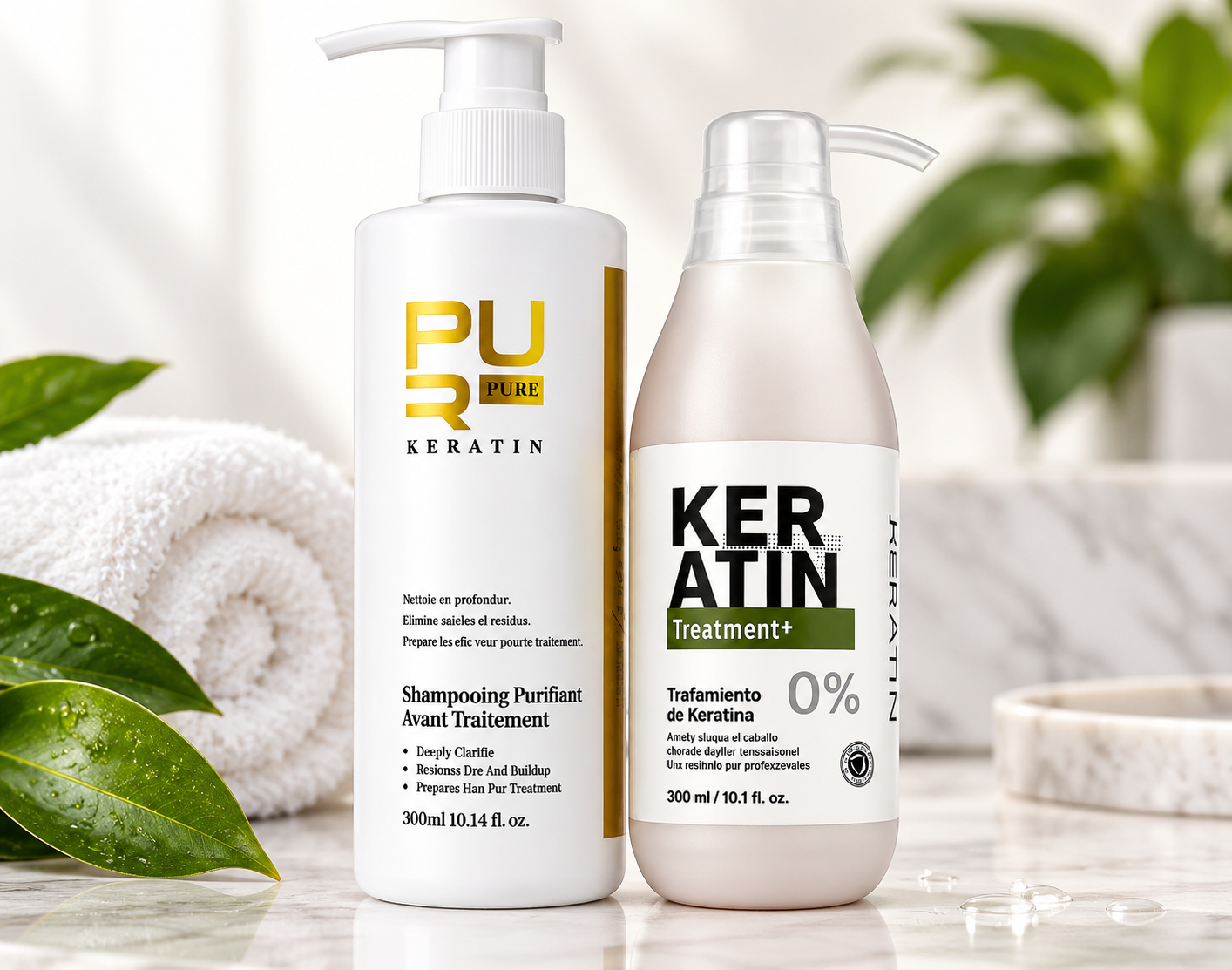
Hard Water and Keratin Treatments: Does Hard Water Make Keratin Fade Faster?
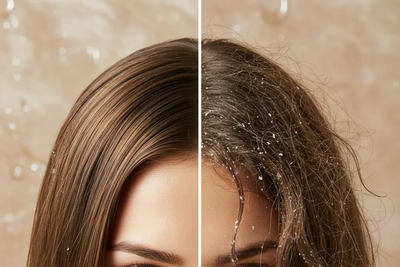
Hard water can make a keratin treatment seem to fade faster because dissolved minerals such as calcium and magnesium can accumulate on the hair, leaving it duller, rougher, heavier and more prone to tangling or frizz. Hard water does not simply "wash keratin out" in one shower, but repeated mineral buildup—and the stronger cleansing sometimes used to remove it—can work against the smooth, glossy result you are trying to maintain.
If your keratin treatment looks beautiful after the salon but your hair quickly becomes rough, coated or difficult to manage at home, your shampoo may not be the only variable worth investigating. Your shower water can matter too.
This guide explains what hard water actually is, how to recognize mineral buildup, whether shower filters really help, how to remove deposits without unnecessarily shortening your treatment, and how to build a hard-water-friendly keratin aftercare routine.
Quick Answer: Does Hard Water Ruin a Keratin Treatment?
- Hard water does not instantly destroy a keratin treatment.
- Calcium and magnesium in hard water can leave deposits on hair over repeated washes.
- Mineral buildup can make keratin-treated hair feel less smooth and look less shiny.
- Buildup may make frizz appear to return even when the smoothing treatment has not completely disappeared.
- Repeated clarifying or chelating to remove deposits can also shorten the cosmetic life of some keratin treatments.
- A water softener is the most direct way to reduce hardness minerals throughout the home.
- Some shower filters reduce chlorine or sediment but do not necessarily soften hard water.
The key distinction: hard water can interfere with how your keratin-treated hair looks and feels without literally removing the entire treatment overnight.
What Is Hard Water?
Hard water contains relatively high concentrations of dissolved minerals, primarily calcium and magnesium.
Water picks these minerals up naturally as it travels through mineral-rich rock and soil before reaching your home.
Hard water is not the same thing as dirty or unsafe water. It is primarily a mineral-content issue.
For hair care, those dissolved minerals matter because repeated exposure can leave deposits on the hair and interact with shampoos, conditioners and styling products.
How Can Hard Water Affect Keratin-Treated Hair?
Keratin treatments are popular because they make hair appear smoother, shinier and less frizzy. Mineral buildup can create almost the opposite cosmetic effect.
Over time, hard-water exposure may contribute to hair that feels:
- Rough.
- Dull.
- Coated.
- Heavy.
- Dry.
- Difficult to detangle.
- Less responsive to conditioner.
That creates an important problem for keratin users: mineral buildup can mimic a fading keratin treatment.
You may assume the smoothing service has completely worn off when part of the problem is actually residue sitting on the hair.
Does Hard Water Actually Strip Keratin From Hair?
It is more accurate to say that hard water can interfere with the appearance and maintenance of a keratin treatment than to say calcium and magnesium simply "strip keratin."
There are several overlapping mechanisms.
1. Mineral Buildup Changes the Surface of the Hair
Calcium and magnesium deposits can accumulate with repeated washing, changing the way the hair feels and reflects light.
Hair that looked glossy immediately after keratin may begin to look duller or feel less silky.
2. Hair May Become Harder to Condition
When mineral and product residue accumulate, conditioners and masks may not leave the hair feeling as soft as expected.
3. You May Wash More Aggressively
This is one of the most overlooked connections between hard water and keratin longevity.
If hair feels coated, people often respond by:
- Washing more frequently.
- Using stronger shampoos.
- Clarifying repeatedly.
- Scrubbing the hair more aggressively.
Those habits can shorten the visible life of a semi-permanent smoothing treatment.
4. Frizz Can Become More Noticeable
As hair becomes rougher or drier, the sleek finish created by keratin may become less obvious.
Why Does My Keratin Treatment Look Like It Is Fading So Fast?
Hard water is one possibility—but it is not the only one.
Premature loss of smoothness can also be associated with:
- Frequent shampooing.
- Aggressive cleansing products.
- Swimming in chlorinated or salt water.
- Frequent heat styling.
- Sun exposure.
- Hair porosity.
- The specific keratin formula.
- Application technique.
- Heavy product buildup.
- Your natural curl or frizz pattern.
Before blaming your water, look for evidence of mineral buildup and consider your complete maintenance routine.
How Do You Know If You Have Hard Water?
You cannot reliably determine water hardness simply by looking at a glass of water.
However, common clues around the home include:
- White scale around faucets.
- Chalky deposits on showerheads.
- Spots on glass shower doors.
- Soap that does not lather as easily as expected.
- A film left on bathroom surfaces.
- Mineral deposits in kettles or appliances.
Hair-related clues can include:
- Hair that feels coated soon after washing.
- Loss of shine.
- Conditioner seeming less effective.
- Persistent roughness despite using moisturizing products.
- Unexpected discoloration in very light hair.
These signs are not proof by themselves. A water-hardness test is a much better way to know.
How Is Water Hardness Measured?
Water hardness is commonly expressed as the concentration of calcium carbonate, often in milligrams per liter (mg/L) or parts per million (ppm).
A commonly used U.S. Geological Survey classification is:
| Water Hardness | Calcium Carbonate (mg/L) |
|---|---|
| Soft | 0–60 mg/L |
| Moderately hard | 61–120 mg/L |
| Hard | 121–180 mg/L |
| Very hard | More than 180 mg/L |
If you are unsure about your home, check your local water-quality report or use a hardness test kit.
Hard Water Buildup vs Keratin Wearing Off: How Can You Tell?
| Possible Mineral Buildup | Keratin Naturally Wearing Off |
|---|---|
| Hair suddenly feels coated | Natural texture gradually returns |
| Hair looks dull despite conditioning | Frizz slowly increases over time |
| Products seem to sit on the hair | Styling time gradually increases again |
| Mineral scale is visible around the shower | No obvious change in household water conditions |
| Hair improves after appropriate mineral removal | Smoothing effect continues to diminish normally |
Both can happen at the same time, so this is not a diagnostic test. But it can help you decide whether water quality deserves more attention.
Can Hard Water Make Hair Frizzy Again After Keratin?
Yes, mineral buildup can contribute to hair feeling rougher and appearing frizzier, which can make it seem as though your keratin treatment stopped working early.
That does not necessarily mean the entire smoothing effect has disappeared.
Think of it as two separate layers of the problem:
- The keratin treatment is gradually fading over time.
- Mineral and product deposits can make the hair surface look and feel worse in the meantime.
Managing buildup may therefore improve the feel and appearance of the hair even though it cannot restore a keratin treatment that has genuinely worn off.
Can Hard Water Make Keratin-Treated Hair Dry?
It can contribute to the sensation of dryness and roughness.
Mineral buildup can make hair feel stiff or coated and can make your usual conditioner seem less effective.
However, dry hair after keratin can have many other causes, including:
- Excessive flat-iron heat during treatment.
- Previous bleaching or chemical processing.
- Frequent hot-tool use.
- Sun exposure.
- Overwashing.
- Insufficient conditioning.
Do not assume every case of post-keratin dryness is caused by hard water.
Can Hard Water Affect Blonde, Gray or White Keratin-Treated Hair?
Very light hair deserves additional attention because discoloration is easier to see.
Mineral accumulation and other water contaminants can contribute to unwanted tonal changes, while heat exposure during smoothing treatments can also influence the appearance of pale hair.
If your blonde, gray or white hair becomes yellow, brassy or dull after treatment, investigate more than one possibility:
- Hard-water buildup.
- Iron or copper in the water.
- Heat-related yellowing.
- Chlorine exposure.
- UV exposure.
- Styling-product buildup.
For a complete guide, read Keratin Treatment on Gray or White Hair: Will It Turn Yellow?.
Does a Shower Filter Protect Keratin From Hard Water?
This is where marketing claims often become misleading: a standard shower filter is not necessarily a water softener.
Many shower filters are designed primarily to reduce chlorine, sediment, odors or certain contaminants.
Traditional water softening, on the other hand, is specifically designed to reduce hardness by removing or exchanging calcium and magnesium ions.
Therefore:
- A shower filter may improve certain aspects of your shower water.
- It may reduce chlorine if the filter is specifically designed and certified to do so.
- It does not automatically mean calcium and magnesium hardness has been removed.
- Check exactly what a filter is independently tested or certified to reduce before buying it for hard water.
If your primary problem is genuinely high calcium and magnesium hardness, look for a solution that specifically addresses water hardness rather than assuming every shower filter does.
Shower Filter vs Water Softener: What's Better for Keratin Hair?
| Shower Filter | Water Softener |
|---|---|
| May reduce chlorine and sediment depending on the system | Specifically targets hardness minerals such as calcium and magnesium |
| Usually installed at the shower | Often treats water entering the home |
| Generally simpler to install | More substantial installation and maintenance |
| Does not automatically soften water | Designed specifically for hard-water reduction |
| Check certification and contaminant-reduction claims | Check capacity, regeneration method and water requirements |
Should You Use Chelating Shampoo After a Keratin Treatment?
Chelating products are designed to bind certain mineral deposits so they can be removed from the hair.
That can make them useful when genuine mineral buildup is present.
But there is a trade-off:
A strong mineral-removal or clarifying wash may also be more aggressive than the gentle shampoo normally recommended for maintaining a keratin treatment.
For that reason:
- Do not chelate after every wash.
- Do not use strong clarifying shampoo simply because you suspect hard water.
- Confirm that buildup is actually a likely problem.
- Follow the instructions for your keratin treatment.
- Ask your stylist about periodic mineral removal if your water is very hard.
The goal is to remove problematic buildup without turning aggressive cleansing into your everyday routine.
Can Clarifying Shampoo Remove Hard Water Buildup?
Clarifying and chelating are related but not identical.
A clarifying shampoo is generally designed to remove oils, styling products and general residue.
A chelating product contains ingredients intended to bind mineral ions and help remove mineral deposits.
Some shampoos do both, but you should not assume every clarifying shampoo is an effective hard-water treatment.
This distinction matters after keratin because unnecessarily aggressive clarification may shorten the visible smoothing result.
Should You Use a Purifying Shampoo After Keratin?
Not as your routine maintenance shampoo unless the product is specifically intended for post-treatment use.
Purifying shampoos are commonly used before keratin treatments to remove buildup and prepare the hair.
After treatment, regular washing should generally be gentler.
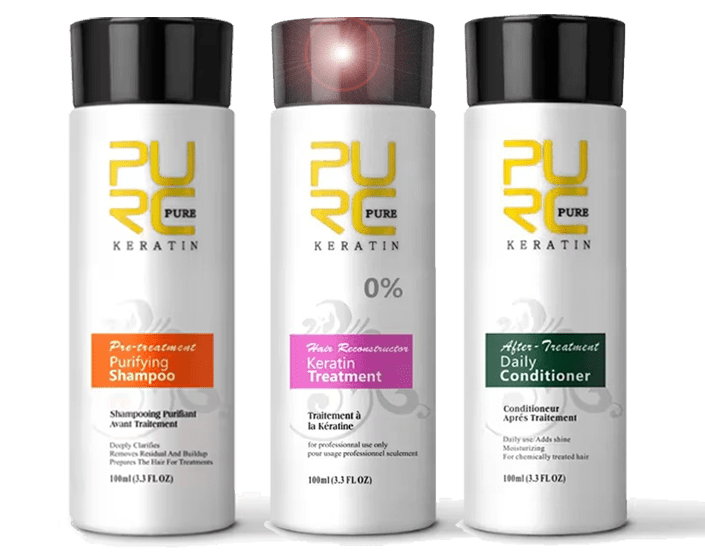
Pure Keratin offers an After Keratin Treatment Daily Shampoo specifically for ongoing maintenance of keratin-treated hair.
How to Protect a Keratin Treatment If You Have Hard Water
1. Confirm That Your Water Is Actually Hard
Use your local water-quality report or a hardness test instead of relying only on how your hair feels.
2. Address the Water at the Source When Possible
If your water is genuinely very hard, a properly designed water-softening solution addresses calcium and magnesium before they repeatedly reach your hair.
3. Understand What Your Shower Filter Does
If you use a shower filter, check its specifications. Determine whether it reduces chlorine, sediment, hardness minerals, metals—or some combination.
Do not assume "filtered" automatically means "softened."
4. Use Gentle Keratin Aftercare
For everyday washing, use a shampoo intended for keratin-treated hair rather than continuously trying to strip the hair clean.
Explore the Pure Keratin After Keratin Treatment Daily Shampoo.
5. Condition Consistently
If hard-water exposure leaves your lengths feeling rough, consistent conditioning can improve manageability and softness.
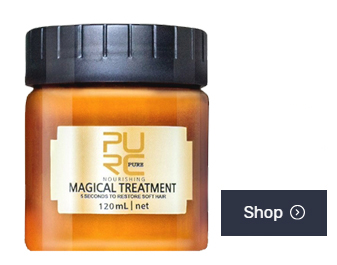
For deeper conditioning, explore Pure Keratin Hair Masks.
6. Use Mineral Removal Strategically
If buildup is confirmed, occasional chelating may be useful. Avoid turning a strong mineral-removal shampoo into your everyday cleanser.
7. Rinse Thoroughly
Product residue combined with mineral deposits can make hair feel especially coated. Make sure shampoo and conditioner are thoroughly rinsed from the hair.
8. Avoid Very Hot Water
Extremely hot showers can leave already dry or processed hair feeling rougher. Lukewarm water is a more hair-friendly choice.
What If You Travel Somewhere With Hard Water?
A short trip through a hard-water region is unlikely to instantly erase a keratin treatment.
For travel:
- Bring your normal keratin-compatible shampoo.
- Condition the lengths consistently.
- Avoid unnecessary daily washing.
- Do not panic and start clarifying after one shower.
- If you spend weeks or months in a very hard-water location, monitor for mineral buildup.
Keratin maintenance is about cumulative exposure, not one imperfect shower.
What If You Already Have Hard-Water Buildup?
If your treatment suddenly looks dull and you suspect minerals:
- Check whether your home has hard water.
- Look for scale around shower fixtures.
- Review whether you recently changed locations or water sources.
- Consider professional assessment of the hair.
- Use an appropriate mineral-removal treatment only when needed.
- Deep-condition afterward if appropriate for your hair.
- Address the water source to prevent the same buildup from immediately returning.
Do not repeatedly clarify the hair without addressing the source of the deposits. That can create a cycle of buildup, aggressive cleansing, dryness and premature loss of smoothness.
Can You Use Apple Cider Vinegar to Remove Hard Water After Keratin?
DIY acidic rinses are frequently recommended online for hard-water hair, but they are difficult to standardize.
The concentration, hair condition, keratin formula and frequency of use all matter.
If your goal is genuine mineral removal, a product specifically formulated and tested for that purpose is more predictable than repeatedly experimenting with homemade acidic mixtures.
Very porous, bleached, sensitive or damaged hair deserves particular caution with DIY chemistry.
Does Bottled or Distilled Water Help Keratin-Treated Hair?
Using distilled or appropriately softened water for a final rinse can reduce mineral exposure during that particular wash, but washing an entire head of hair with bottled water is impractical for most people.
If your home has a persistent hard-water problem, addressing the water supply is a more sustainable solution than buying bottles for every shampoo.
Can Hard Water Affect a Keratin Treatment From the First Wash?
One hard-water wash is unlikely to make a properly performed keratin treatment suddenly disappear.
The bigger concern is repeated exposure.
Mineral deposits can accumulate gradually, so changes may become more noticeable over multiple wash cycles.
This is another reason to be skeptical of claims that one hard-water shower immediately "destroyed" an entire keratin treatment.
Hard Water vs Chlorine: Are They the Same Problem?
No.
Hardness refers primarily to dissolved calcium and magnesium. Chlorine is a disinfectant commonly used in treated water supplies.
A home can therefore have:
- Hard water with chlorine.
- Hard water with little residual chlorine.
- Softer water that still contains chlorine.
This distinction is important when choosing filtration equipment. A product designed to reduce chlorine does not automatically remove hardness minerals.
Best Routine for Keratin-Treated Hair in a Hard-Water Home
| Problem | Recommended Approach |
|---|---|
| Confirmed hard water | Consider a genuine water-softening solution |
| Chlorine concern | Use a filter specifically certified for chlorine reduction |
| Routine washing | Use gentle keratin-compatible shampoo |
| Dry lengths | Condition consistently |
| Confirmed mineral buildup | Use appropriate chelating care occasionally |
| Heavy general product buildup | Clarify only when needed |
| Hair becoming rough | Check both water quality and your complete aftercare routine |
Pure Keratin Aftercare for Hard-Water Areas
If you live in a hard-water area, your hair routine should have two separate goals: reduce unnecessary mineral accumulation and maintain the smoothness and moisture of keratin-treated hair.
For regular maintenance, explore:
- Pure Keratin After Keratin Treatment Daily Shampoo for routine cleansing after a smoothing service.
- Pure Keratin Hair Masks for deeper conditioning when lengths feel dry or rough.
- 200+ Pure Keratin Hair-Care Products for treatment and maintenance routines.
With more than 30 years of hair-care experience, Pure-Keratin.com offers professional and at-home keratin systems alongside shampoos, conditioners, masks and maintenance products at accessible price points.
People Also Ask About Hard Water and Keratin Treatments
Does hard water make keratin fade faster?
Hard water can contribute to keratin-treated hair losing its smooth, shiny appearance sooner. Calcium and magnesium can accumulate on the hair, while the extra washing or strong cleansing used to remove buildup can also work against treatment longevity.
Does hard water ruin a keratin treatment?
Not instantly. One hard-water shower is unlikely to destroy a properly performed keratin treatment. Repeated mineral exposure can cause buildup that makes the hair feel rougher, duller and frizzier.
How do I protect my keratin treatment from hard water?
Confirm your water hardness, consider genuine water softening if hardness is high, use gentle keratin-compatible shampoo, condition regularly, and use mineral-removal products only when needed.
Will a shower filter protect keratin-treated hair?
It depends on the filter. Some shower filters reduce chlorine or sediment but do not significantly reduce calcium and magnesium. If hard water is the problem, choose a system specifically designed to address hardness.
Is a shower filter the same as a water softener?
No. A conventional water softener specifically reduces hardness minerals such as calcium and magnesium. Many shower filters are primarily designed for chlorine, sediment or other contaminants.
Can I use chelating shampoo after a keratin treatment?
Yes, when genuine mineral buildup needs to be removed, but strong chelating products should generally be used strategically rather than as an everyday shampoo because aggressive cleansing may shorten the visible life of the treatment.
Can I use clarifying shampoo after keratin?
Clarifying shampoo can remove product buildup, but frequent aggressive clarification may cause your smoothing results to fade sooner. Also, not every clarifying shampoo is specifically formulated to remove hard-water minerals.
Why is my hair frizzy again only a few weeks after keratin?
Possible causes include mineral buildup, frequent washing, unsuitable shampoo, chlorine or salt-water exposure, heat, hair porosity, or the treatment itself gradually fading. Hard water is one possibility, not the only explanation.
Can hard water make keratin-treated hair feel sticky or coated?
Mineral deposits combined with shampoo, conditioner and styling-product residue can contribute to a coated or heavy feeling. If the problem persists, investigate water hardness and product buildup rather than simply applying more conditioner.
Can hard water turn blonde or gray hair brassy?
Water-related mineral and metal deposits can contribute to unwanted tonal changes in very light hair. Heat, UV exposure, chlorine and previous chemical processing can also contribute, so discoloration should not automatically be blamed on calcium hardness alone.
Does boiling water remove hardness for washing hair?
Boiling is not a practical general solution for shower water. Some temporary hardness can precipitate when water is boiled, but permanent hardness remains. A properly selected water-treatment system is more practical for a persistent household problem.
Hard Water and Keratin Treatment: The Bottom Line
Yes, hard water can make a keratin treatment appear to fade faster—but the relationship is more nuanced than saying hard water simply strips keratin from your hair.
Calcium and magnesium can accumulate on the hair through repeated exposure. That buildup may leave freshly treated hair feeling rough, dull, coated and less manageable, reducing the silky appearance you expected from your smoothing treatment.
The situation can become worse when mineral buildup leads to repeated clarifying, aggressive shampooing or more frequent washing.
The solution is not to stop washing your hair. Instead:
- Find out whether you actually have hard water.
- Distinguish water softening from ordinary shower filtration.
- Address significant hardness at the source when possible.
- Use mineral-removal products strategically rather than constantly.
- Maintain your hair with gentle keratin-compatible shampoo and adequate conditioning.
And remember: if your keratin treatment suddenly feels less smooth, the treatment itself may not be the only variable. Sometimes the missing piece in your aftercare routine is the water coming out of your shower.
For everyday maintenance, explore the complete selection of professional smoothing treatments, shampoos, conditioners and masks at Pure-Keratin.com.
Sources and Further Reading